
Most people picture years of metal brackets when they think about fixing an overbite. Not anymore. Invisalign clear aligners correct many mild to moderate overbites by gradually shifting the upper and lower teeth into place. The real question isn’t whether Invisalign helps. It’s whether it fits your overbite.
Here’s what this article covers:
- What an overbite actually is and why severity determines your options
- How Invisalign physically corrects an overbite step by step
- Which overbites Invisalign can fix and which need braces or surgery
- Realistic treatment timelines based on case complexity
- The tools like attachments and elastics that make it work
If you’re in McKinney and wondering where your overbite falls, the team at Stonelodge Dental offers Invisalign consultations with 3D imaging to map your exact case. Dr. Basit’s 18 years of experience means you’ll get an honest answer about whether Invisalign is the right tool for you.
What Is an Overbite
An overbite occurs when the upper teeth overlap the lower teeth excessively. A normal overbite, or ideal bite, is when your upper incisors cover approximately one-third to one-half of your lower incisors, and normal front teeth overbites would not usually require treatment. The problem starts when that overlap becomes excessive, creating what’s often called a deep bite.
Why Overbites Develop
Overbites come from a combination of genetic and behavioral factors:
- Genetics: Jaw shape and size are largely inherited, and skeletal overbites often run in families
- Thumb sucking: Prolonged thumb sucking in childhood pushes the upper front teeth forward
- Tongue thrusting: Repeated pressure from the tongue against the teeth alters their position over time
- Mouth breathing: Chronic mouth breathing can affect jaw development and tooth positioning
- Poor oral habits: Prolonged pacifier use and other habits contribute during development
Why Overbites Need Correcting
An untreated overbite isn’t just an aesthetic concern. Overbites can lead to jaw pain, uneven tooth wear, difficulty chewing, and self-consciousness about one’s smile. The deeper issues include:
- Excessive wear on the backs of the upper front teeth and the lower teeth
- Enamel loss and increased tooth sensitivity over time
- Gum damage and recession behind the upper and lower front teeth
- Jaw pain and strain from improper bite mechanics
- Difficulty chewing and, in severe cases, painful sores on the palate
The Critical Distinction: Dental vs. Skeletal
This is the factor that determines everything about your treatment options:
| Overbite Type | What Causes It | Invisalign Effectiveness |
| Dental overbite | Teeth position and alignment | High for mild to moderate |
| Skeletal overbite | Jaw structure and bone position | Limited; may need braces or surgery |
A dental overbite comes from how the teeth are positioned. A skeletal overbite comes from how the jaws themselves are structured. Invisalign moves teeth, so it excels at dental overbites but has real limits with significant skeletal cases.
How Invisalign Corrects an Overbite
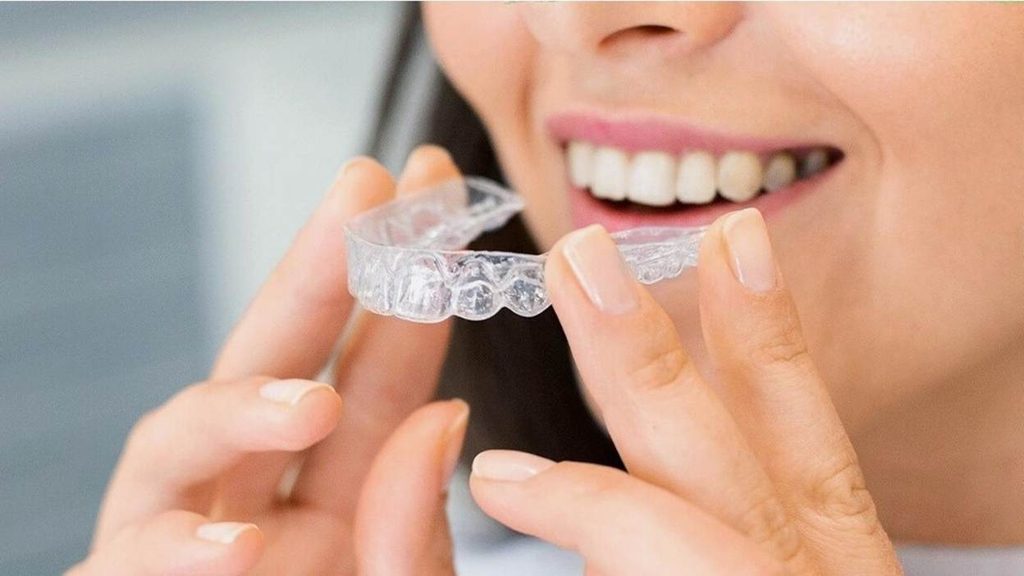
Invisalign uses a series of custom-made, clear plastic aligners to gradually shift teeth into the correct position, and for overbites, the aligners help move the upper teeth back or the lower teeth forward, depending on what’s needed.
The step-by-step process:
Step 1: 3D digital mapping
Invisalign uses 3D digital imaging to create a precise treatment plan. Your dentist scans your teeth and maps the exact movements needed to correct your specific overbite, previewing the final result before treatment even begins.
Step 2: Custom aligner fabrication
A series of custom aligners is fabricated, each one slightly different from the last. These aligners are changed approximately every two weeks, each set slightly different from the previous one, ensuring a steady progression toward the corrected bite.
Step 3: Gradual, controlled tooth movement
Each aligner applies precise, controlled pressure to move teeth incrementally. For overbite correction, this means gradually repositioning the upper front teeth and, where needed, guiding the lower teeth into better alignment to reduce the overlap.
Step 4: Consistent wear
This is the non-negotiable part. Wearing the aligners 20 to 22 hours daily is critical to ensure progress. Aligners only work when they’re in your mouth. Every hour they’re out is time your teeth aren’t moving.
The Tools That Make It Work
Invisalign isn’t just plastic trays anymore. Several add-on tools expand what it can correct:
- Attachments: Small, tooth-colored attachments may be placed on certain teeth to give the aligners more grip and control. These enhance tooth movement in cases that need extra precision
- Elastics: Elastics, similar to those used with braces, can sometimes be paired with aligners to encourage proper jaw positioning, helping reduce the overlap between upper and lower teeth
- Mandibular Advancement feature: For growing patients, the Invisalign Mandibular Advancement feature uses small, built-in wings on the aligners to gently move the lower jaw forward while aligning teeth, which can prevent a severe overbite from worsening
Which Overbites Invisalign Can and Can’t Fix
Invisalign is genuinely effective for a large share of overbite cases, but it has a ceiling, and pretending otherwise sets patients up for disappointment.
Invisalign Works Well For
- Mild to moderate dental overbites: This is Invisalign’s sweet spot. Invisalign works very well for mild and moderate overbites, especially in teenagers and young adults. When the overbite comes from tooth position rather than jaw structure, clear aligners move those teeth predictably into proper alignment.
- Overbites combined with crowding or spacing: Invisalign handles overbites alongside other alignment issues in the same treatment, correcting the bite and straightening teeth simultaneously.
- Growing patients with developing jaws: For children, early Invisalign treatment for overbite can be especially effective because their jaws are still developing, and early intervention can prevent more severe overbites from forming later.
Invisalign Struggles With
- Severe overbites: A severe overbite is one large enough that you experience aesthetic concerns and overbite symptoms such as teeth wearing, and these are the types that may cause future problems. The more severe the overbite, the less predictable clear aligners become.
- Skeletal overbites: If the overbite is severe or caused by jaw misalignment, traditional braces or other orthodontic treatments might be necessary. When the root cause is the jaw structure itself rather than tooth position, Invisalign alone often can’t achieve full correction.
- Cases needing significant jaw repositioning: In cases where a significant jaw correction is needed, such as a skeletal overbite, traditional braces or orthodontic appliances may be recommended, and the most severe skeletal cases sometimes require orthognathic surgery.
| Overbite Scenario | Best Treatment |
| Mild dental overbite | Invisalign |
| Moderate dental overbite | Invisalign, often with attachments |
| Overbite with crowding | Invisalign |
| Growing child’s overbite | Invisalign First or Mandibular Advancement |
| Severe dental overbite | Invisalign with elastics, or braces |
| Skeletal overbite | Traditional braces, possibly surgery |
Don’t self-diagnose the severity of your overbite. What feels “mild” to you may be skeletal, and what feels severe may be a straightforward dental case. Only a clinical exam with 3D imaging tells you which category you’re actually in.
Realistic Treatment Timelines
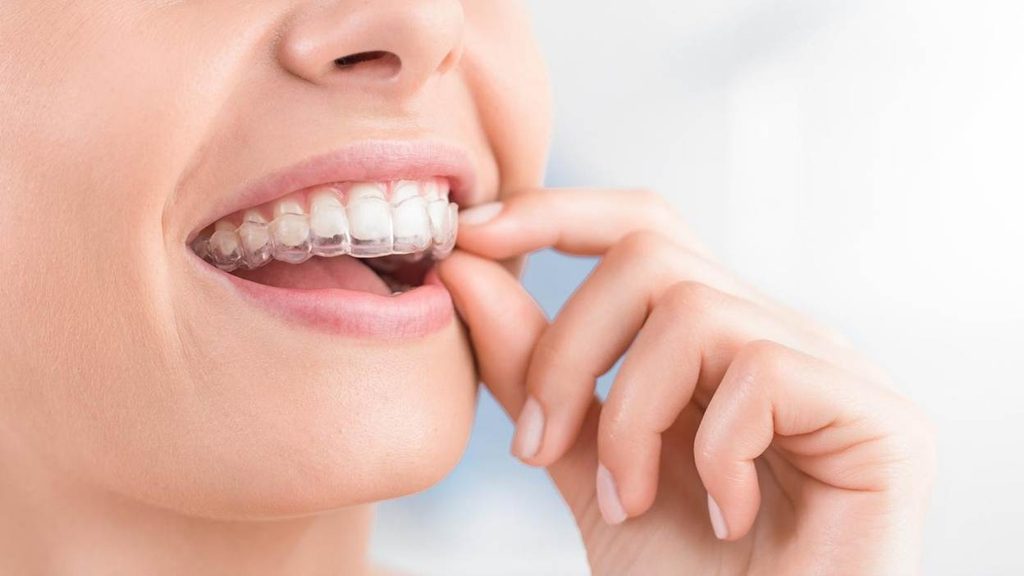
Everyone wants a number. The honest answer depends on your overbite’s severity, but here’s a realistic framework based on real treatment data.
Invisalign treatment for an overbite can take around 12 to 24 months, depending on your case. That’s a wide range, and understanding where you’ll fall within it comes down to severity.
| Overbite Severity | Typical Treatment Time |
| Mild dental overbite | 6–12 months |
| Moderate dental overbite | 12–18 months |
| Severe dental overbite | 18–24 months |
| Skeletal (if Invisalign viable) | Up to 24 months, often combined treatment |
A few timeline realities worth knowing:
- Average Invisalign treatment runs 12 to 18 months across all case types, with overbite correction typically landing in that window for moderate cases
- Some patients see results in as little as 6 months for very mild overbites
- Severe cases may require up to 2 years, and some ultimately need braces or surgery to complete
- Compliance directly affects timeline: inconsistent wear extends treatment, sometimes significantly
The single biggest variable you control is wear time. Patients who consistently hit 20 to 22 hours daily finish on schedule. Those who don’t add months to their treatment.
Invisalign vs. Braces for Overbite
For overbite correction specifically, here’s how the two options compare on the factors that matter most.
| Factor | Invisalign | Traditional Braces |
| Best for | Mild to moderate overbites | Severe and skeletal overbites |
| Appearance | Virtually invisible | Visible metal brackets |
| Removable | Yes, for eating and cleaning | No, fixed to teeth |
| Office visits | Fewer office visits | More frequent adjustments |
| Oral hygiene | Easier; removable for brushing | Harder to clean around brackets |
| Comfort | Smooth plastic, no irritation | Brackets can irritate |
| Severe case control | Limited | More precise |
A few key points that explain the trade-offs:
- For mild to moderate overbites, Invisalign uses a combination of tooth movement and jaw alignment, and can fix bite problems as effectively as braces in many cases.
- Braces are often better for severe overbites because they provide more precise control over complex tooth and jaw movements
- Invisalign requires fewer office visits than traditional braces, a meaningful advantage for busy schedules
- Invisalign is removable, which makes cleaning your teeth and maintaining oral health far simpler than working around fixed metal brackets
For patients weighing the broader decision beyond just overbite correction, understanding whether Invisalign is better than braces for your specific goals matters as much as the overbite question itself. And if you’re still deciding whether you qualify at all, Invisalign candidacy depends on more than just your bite.
Fix Your Overbite the Discreet Way at Stonelodge Dental
Invisalign genuinely helps overbites, and for mild to moderate cases, it corrects them as effectively as braces while staying virtually invisible. The key is knowing whether your overbite is dental or skeletal, because that single distinction determines whether clear aligners are the right tool for you.
Key takeaways:
- Invisalign effectively corrects mild to moderate dental overbites by gradually shifting the upper and lower teeth
- An overbite becomes a problem when upper teeth overlap lower teeth excessively, beyond the normal one-third to one-half coverage
- Skeletal overbites caused by jaw structure often require traditional braces or, in severe cases, surgery
- Attachments, elastics, and the Mandibular Advancement feature expand what Invisalign can correct
- Treatment typically takes 12 to 24 months, with mild cases finishing in as little as 6 months
- Aligners must be worn 20 to 22 hours daily; compliance directly determines your timeline
- Only a clinical exam with 3D imaging can confirm whether your overbite is dental or skeletal
At Stonelodge Dental, Dr. Saadia Basit uses advanced 3D imaging to map your exact overbite and build a personalized Invisalign treatment plan around your specific case. If Invisalign is the right fit, you’ll know. If braces are the better call, you’ll know that too, with no guesswork.
Book your Invisalign consultation today or call 214-613-1500 to speak with our McKinney team directly.
Frequently Asked Questions
Is Invisalign worth it for overbite?
For mild to moderate overbites, yes. Invisalign corrects the bite as effectively as braces while staying nearly invisible and removable. Severe or skeletal overbites may need braces for better results.
Is $5,000 a lot for Invisalign?
No, $5,000 sits within the typical range. Invisalign averages $4,500 to $6,000 without insurance in 2026. Overbite correction may cost more for complex cases requiring attachments or elastics.
How long will it take to fix an overbite with Invisalign?
Typically 12 to 24 months, depending on severity. Mild overbites can correct in as little as 6 months. Consistent 20 to 22 hour daily wear keeps treatment on schedule.
Why don’t dentists recommend Invisalign?
Dentists may advise against Invisalign for severe skeletal overbites, complex bite issues, or patients who can’t commit to 20 to 22 hours of daily wear. In those cases, traditional braces deliver more predictable results.
Can Invisalign fix a deep overbite?
Invisalign can fix mild to moderate deep bites using attachments and elastics for added control. Severe deep bites caused by jaw structure often require braces or combined orthodontic treatment for full correction.
Will my overbite come back after Invisalign?
Not with proper retention. Wearing retainers as directed after treatment keeps your corrected bite in place. Skipping retainers allows teeth to shift back toward their original position over time.