
You invested in a new smile. Now the question is how to protect it. Here’s the part most people get backwards: porcelain veneers themselves don’t decay, but the natural teeth underneath them absolutely can. Even though porcelain itself doesn’t decay, the natural teeth underneath your veneers still can, which makes consistent oral hygiene the foundation of long-lasting veneers. Neglect the tooth beneath the shell, and the shell won’t matter for long.
The typical lifespan of porcelain veneers ranges from 10 to 15 years, with up to 95% remaining functional after 10 years, though longevity depends heavily on patient care and lifestyle habits. That range is wide for a reason, and where you land in it is largely up to you.
Here’s what this article covers:
- The daily oral hygiene routine that protects the tooth beneath the veneer
- Foods and habits that damage veneers, and what to do instead
- How to keep veneers white and stain-free long-term
- Why professional maintenance matters as much as home care
- Protective measures for teeth grinding and contact sports
At Stonelodge Dental in McKinney, Dr. Basit’s team places porcelain veneers through U.S.-certified labs and sends every patient home with a personalized care plan. Getting the veneers right is step one. Keeping them right is where this guide comes in.
The Daily Routine That Protects Your Veneers
Good veneer care isn’t complicated, but it is non-negotiable. The daily habits that protect your veneers are largely the same ones that protect your overall oral health, with a few specific adjustments that matter.
Brush Twice a Day, Gently
To protect the surface of your veneers from scratches, use a soft-bristled toothbrush paired with a non-abrasive toothpaste, preferably one made for sensitive teeth. The soft bristles matter for two reasons: they protect the veneer surface from micro-scratches, and they protect the gum line where the veneer meets your natural tooth.
Brush your teeth twice a day with gentle, circular motions. Aggressive scrubbing wears down the bonding material at the edges of the veneer over time, which is exactly where problems start.
Use the Right Toothpaste
This is one of the most important things people get wrong. Avoid abrasive toothpastes, including many whitening formulas and anything containing baking soda as a primary abrasive. Use a non-abrasive fluoride toothpaste, and be mindful when selecting toothpaste to pair it with a soft-bristled brush. The fluoride protects the natural tooth beneath the veneer from decay. The non-abrasive formula protects the porcelain surface from scratching.
Floss Daily
Flossing protects your gums and prevents gum disease, which can compromise the stability of your veneers over time, and working the floss gently between your teeth helps maintain healthy tissue and prevents inflammation.
Daily flossing removes plaque buildup and food particles at the gum line where veneers meet your natural teeth. This is the exact junction where decay and gum disease threaten the tooth structure holding your veneer in place.
Consider Alcohol-Free Mouthwash
Alcohol-based mouthwashes can weaken the bonding adhesive that holds your veneers to your teeth over time. Switching to an alcohol-free fluoride rinse maintains fresh breath and cavity protection without compromising the bond.
Your daily veneer care checklist:
- Brush twice a day with a soft-bristled toothbrush
- Use non-abrasive fluoride toothpaste, never harsh whitening formulas
- Floss daily, paying attention to the gum line
- Rinse with alcohol-free mouthwash
- Brush gently; let the tools do the work, not the pressure
Foods and Habits That Damage Veneers
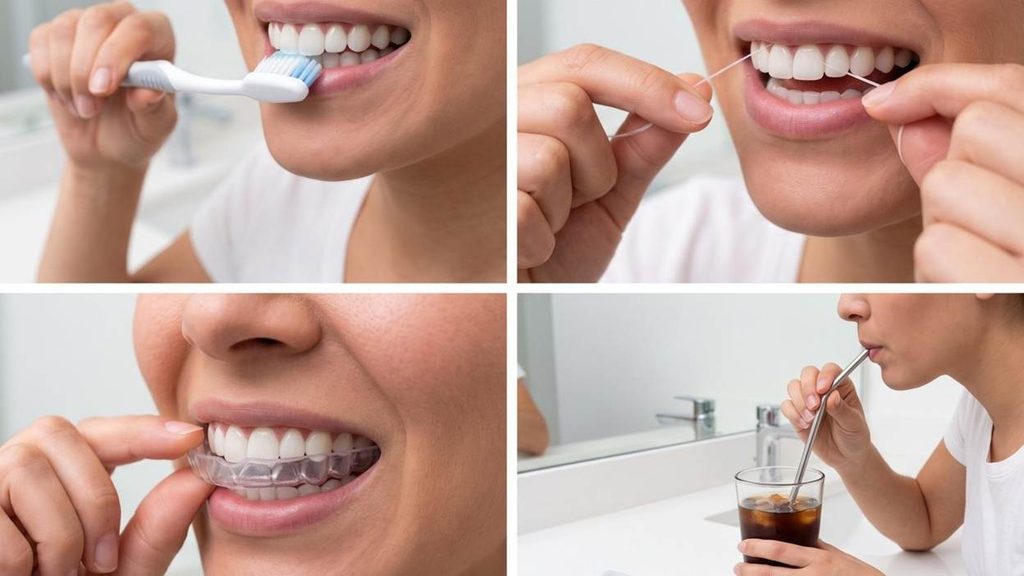
Porcelain veneers are strong, but they are not indestructible. Porcelain veneers are strong, but they are not indestructible, and being mindful of the foods you eat and your oral habits goes a long way in protecting them. Knowing what to avoid is just as important as your daily routine.
Hard Foods and Objects to Avoid
Hard foods like ice, nuts, and hard candies can create unnecessary pressure that may chip or crack veneers. The front teeth, where veneers most often sit, aren’t built to handle the biting force that hard objects demand.
Avoid chewing:
- Ice (one of the most common causes of chipped veneers)
- Hard candies and nuts
- Popcorn kernels
- Raw, hard vegetables bitten directly with front teeth
Sticky Foods That Loosen Veneers
Sticky foods tug at the edges of veneers and can weaken the bond over time. Caramel, taffy, and other sticky substances pull at the bonding material with every chew, gradually compromising the seal between veneer and tooth.
Never Use Your Teeth as Tools
This one causes more veneer damage than almost anything else. Tearing open packages, chewing on pens, or biting your nails all place excessive force on your veneers, so avoid using your teeth as tools. Opening packages, cracking shells, holding objects, all of it puts direct stress on veneers that they’re not designed to absorb.
Tobacco Products
Tobacco products can stain your veneers and impact your smile, and tobacco increases the risk of gum disease and oral cancer. Beyond the staining, tobacco compromises the gum health that keeps your veneer margins sealed and invisible.
| Habit or Food | Risk to Veneers |
| Chewing ice | Chips and cracks |
| Hard candies, nuts | Excessive pressure, fractures |
| Sticky foods (caramel) | Loosens bond at edges |
| Using teeth as tools | Direct force damage |
| Tobacco use | Staining, gum disease |
| Nail biting | Chips front-edge veneers |
If you catch yourself using your teeth to open something, stop and grab scissors. That single habit change prevents one of the most common and entirely avoidable causes of veneer damage.
How to Keep Your Veneers White and Stain-Free
Here’s a fact that catches people off guard: porcelain veneers resist staining, but they aren’t stain-proof, and the teeth around them can still discolor.
Porcelain itself resists stains better than natural enamel, but the bonding material and surrounding teeth can discolor, which is why avoiding stain-causing foods and drinks helps maintain their appearance.
Limit Staining Foods and Drinks
The usual suspects apply here:
- Coffee and tea
- Red wine
- Dark berries and sauces
- Cola and dark sodas
You don’t have to eliminate these entirely. If you do consume stain-causing foods and drinks like coffee, tea, red wine, and berries, rinse your mouth with water afterward to minimize potential staining. That single habit dramatically reduces how long pigments sit in contact with your veneers and surrounding natural teeth.
Understand the Whitening Limitation
This is critical: teeth whitening products do not affect porcelain veneers, so if you want to whiten surrounding natural teeth, you should discuss safe options with your cosmetic dentist.
Applying whitening products on your own can lighten your natural teeth while leaving the veneers unchanged, creating a visible mismatch. If you had your natural teeth whitened before getting veneers, the veneers were shade-matched to that brighter color. Keeping the surrounding teeth from darkening is what maintains the match.
The Edge-Staining Issue
Over time, the most common discoloration on veneers appears at the edges where the porcelain meets your natural tooth. Edge staining can occur over time, and reducing intake of staining foods along with maintaining professional cleanings helps address it. This is exactly the kind of issue that regular dental visits catch and correct early.
Why Professional Maintenance Matters
Home care handles the daily work. But professional maintenance handles what your toothbrush can’t reach and what your eyes can’t see. Both are essential for long-term veneer care.
See Your Dentist Every Six Months
Visit your cosmetic dentist every six months to monitor your veneers and oral health, and during these visits, your dentist cleans your teeth thoroughly and ensures your veneers are in top condition. Regular checkups catch small problems before they become expensive ones. A tiny chip, an early margin stain, or a hint of gum recession is far easier to address early than after it progresses.
Professional Cleanings Preserve the Surface
Professional cleanings can remove surface stains and restore your veneers’ original luster. A dental hygienist uses specialized tools and polishing compounds that safely remove buildup and staining without scratching the porcelain, something no home routine fully replicates. These regular dental cleanings also remove plaque and tartar at the gum line that threaten the natural tooth beneath the veneer.
Address Issues Promptly
If you notice chips, cracks, or discoloration, don’t wait; contact your dental office for a prompt evaluation and repair. Small chips can often be repaired without replacing the entire veneer. Waiting turns a minor fix into a full replacement.
Watch Your Gum Health
Healthy gums are essential for the longevity of your veneers, so if you notice swelling, bleeding, or discomfort, see your dentist promptly, since gum disease can weaken the foundation that supports your veneers. Any signs of inflamed or bleeding gums warrant a prompt visit, since gum recession can expose veneer margins and compromise the whole restoration.
Protecting Veneers From Grinding and Sports
Two specific situations put veneers at outsized risk, and both have simple, effective protections. Ignoring either is one of the fastest ways to shorten your veneers’ lifespan.
Teeth Grinding (Bruxism)
For individuals who grind or clench their teeth, addressing this habit is especially critical because bruxism can quickly wear down veneers, and wearing a nightguard can provide essential protection.
Grinding applies sustained, repetitive force to the veneers, night after night. Over months and years, this wears down the porcelain surface, chips the edges, and stresses the bond. If you grind or clench:
- Ask your dentist about a custom night guard fitted to your mouth
- A custom guard protects both the veneers and your natural teeth from grinding forces
- Over-the-counter guards work in a pinch, but a custom-fitted one distributes force far better
Bruxism is also linked to jaw clenching triggered by certain medications, so if you’ve noticed new grinding, it’s worth discussing the underlying cause with your dentist.
Contact Sports
If you play sports, especially contact sports, protecting your veneers from impact is essential. Wear a mouthguard during athletic activity to shield your veneers from sudden force that can chip or crack them, or knock them loose entirely. A single unprotected impact can undo your entire investment.
Protective measures at a glance:
- Grind or clench? Custom night guard, non-negotiable
- Play contact sports? Athletic mouthguard every time
- Both? You need both guards; they serve different purposes
A custom night guard costs a fraction of what veneer replacement costs. If you grind, it’s the single best investment you can make to significantly extend the life of your veneers.
Care for Your Veneers, Keep Your Smile at Stonelodge Dental
Porcelain dental veneers can deliver a beautiful smile for 10 to 15 years or longer, but only with proper care. The good news is that caring for them isn’t complicated. It’s consistency, the right tools, a few smart habits, and regular professional maintenance that keep both the veneers and the teeth beneath them healthy.
Key takeaways:
- Porcelain doesn’t decay, but the natural teeth underneath your composite veneers still can, so daily proper oral hygiene is essential
- Brush twice daily with a soft-bristled toothbrush and non-abrasive fluoride toothpaste
- Floss daily at the gum line to protect the tooth structure supporting your veneers
- Avoid hard foods, sticky foods, chewing ice, and using your teeth as tools
- Limit coffee, red wine, and tobacco, and rinse with water after staining foods and drinks
- Teeth whitening products don’t affect veneers, so consult your dentist to avoid shade mismatches
- See your dentist every six months for professional cleanings and early issue detection
- Wear a night guard if you grind and a mouthguard for contact sports
At Stonelodge Dental, Dr. Saadia Basit’s team combines expert porcelain veneer placement with personalized maintenance guidance, so your investment stays bright and intact for years. Whether you need a routine cleaning or have noticed a chip, the team here keeps your smile in top shape.
Book your appointment today or call 214-613-1500 to speak with our McKinney team directly.
Frequently Asked Questions
Do’s and don’ts with veneers?
Do: Brush twice daily with a soft-bristled toothbrush, floss daily, rinse after staining foods, and see your dentist regularly. Don’t: Chew ice, use teeth as tools, skip a night guard if you grind, or use abrasive toothpaste.
Can I bite an apple with veneers?
Yes, but slice it first. Biting hard into a whole apple with your front veneers risks chipping. Cutting fruit into pieces and chewing with back teeth protects the bonding material and avoids excessive pressure.
How to make porcelain veneers last longer?
Maintain good oral hygiene, avoid hard and sticky foods, wear a night guard if you grind, limit staining foods, and keep regular dental cleanings. Proper care can significantly extend veneers well past 15 years.
How do your teeth not rot under veneers?
Veneers only cover the front surface, so daily flossing and brushing keep the exposed tooth and gum line clean. Fluoride toothpaste and regular dental visits prevent decay from developing beneath the veneer.
How do I keep my porcelain veneers white?
Porcelain is stain-resistant but not stain-proof. Limit coffee, red wine, and tobacco, rinse with water after staining foods, and get professional cleanings. Avoid whitening products, since they don’t affect veneers and can cause mismatches.
What happens after 10 years of porcelain veneers?
With proper care, up to 95% of veneers remain functional at 10 years. Some may show edge staining, minor wear, or margin exposure. Your dentist assesses whether polishing, repair, or replacement is needed.