
Everyone assumes braces are the budget option, and Invisalign is the splurge. That used to be reliably true. In 2026, it’s a lot messier than that. Metal braces typically cost $3,000 to $7,500 while Invisalign ranges from $3,000 to $8,500, but the price gap is often less than $200, making lifestyle fit more important than cost differences. The sticker prices overlap so heavily that the “cheaper” option depends almost entirely on your case, not the treatment type.
Here’s what this article covers:
- The actual 2026 price ranges for braces and Invisalign, side by side
- How insurance treats each option, and why that changes the math
- The hidden costs most people don’t budget for
- Which option is actually cheaper for your specific case complexity
- Financing and payment plans that change the upfront picture entirely
If you’re in McKinney and trying to figure out which fits your budget, the team at Stonelodge Dental offers Invisalign consultations with transparent pricing and flexible financing options. Dr. Saadia Basit’s 18 years of experience means you’ll get a straight cost breakdown for your case, not a generic estimate.
2026 Price Comparison
In 2026, traditional braces run roughly $3,000 to $7,000 and Invisalign about $3,500 to $8,000, with the national price gap narrowing to roughly $175. That’s a striking shift from even a few years ago, when Invisalign commanded a much steeper premium.
Here’s the side-by-side breakdown:
| Treatment Type | 2026 Cost Range | Typical Average |
| Traditional metal braces | $3,000–$7,500 | $3,500–$5,500 |
| Ceramic braces | $4,000–$8,000 | Higher than metal |
| Lingual braces (hidden) | Highest of all braces | Premium tier |
| Invisalign (full treatment) | $3,500–$8,500 | $4,500–$6,000 |
| Invisalign Express/Lite (mild cases) | Starting ~$1,500 | Budget tier |
For mild to moderate cases, Invisalign is often cheaper than braces or at least price-competitive, and ceramic and lingual braces both cost more than Invisalign on average. The assumption that clear aligners are always the premium choice simply isn’t accurate anymore.
Why the ranges are so wide comes down to four factors:
- Case complexity: Severe misalignment and bite issues require longer treatment and raise costs on both sides
- Treatment duration: Longer orthodontic journeys mean more adjustment appointments and higher overall pricing
- Location: Metropolitan and high-cost areas sit at the upper end of both ranges
- Provider and materials: Standard metal braces use lower-cost materials; Invisalign’s custom lab-fabricated aligners cost more to produce
So which is cheaper, braces or Invisalign, at face value? Braces, slightly, for most standard cases. But “slightly” is doing a lot of work in that sentence, and the next few sections explain why the face-value number rarely tells the whole story.
How Insurance Changes the Math
This is where the braces vs Invisalign cost comparison gets genuinely interesting, and where the real gap between the two often appears.
Most PPO dental plans cover Invisalign at the same rate as traditional metal braces under their lifetime orthodontic maximum of $1,000 to $3,500, and major providers like Delta Dental, Cigna, Aetna, and Humana generally apply orthodontic benefits equally to both treatment types.
On paper, that means insurance treats both options the same. In practice, there’s a catch worth understanding.
How orthodontic insurance typically works:
- Many dental insurance plans include a lifetime maximum payout for orthodontic treatment, separate from your annual maximum
- Typical orthodontic coverage ranges from $1,000 to $2,500, though some plans reach up to $3,000
- Coverage is usually a percentage, often around 50%, up to that lifetime cap
- Both braces and Invisalign draw from the same orthodontic benefit
The catch with Invisalign coverage: Some insurance providers historically classified Invisalign as cosmetic rather than medically necessary, which affected coverage. The key is ensuring your provider submits the insurance claim correctly as orthodontic treatment rather than a cosmetic procedure, since a simple billing error can cost hundreds of dollars in uncovered expenses.
Here’s how the effective cost shakes out after typical insurance:
| Scenario | Braces (before/after insurance) | Invisalign (before/after insurance) |
| $2,000 orthodontic benefit applied | $4,500 → $2,500 | $5,500 → $3,500 |
| No orthodontic coverage | $4,500 | $5,500 |
| FSA/HSA pre-tax dollars used | Reduces effective cost 20–35% | Reduces effective cost 20–35% |
Both braces and Invisalign are FSA and HSA eligible under IRS guidelines. With a 2026 FSA limit of $3,200 and HSA limit of $4,300, using pre-tax dollars for either treatment reduces your effective out-of-pocket cost by 20 to 35% depending on your federal tax bracket. This is one of the most underused cost-saving tools in orthodontics.
The Hidden Costs Nobody Budgets For
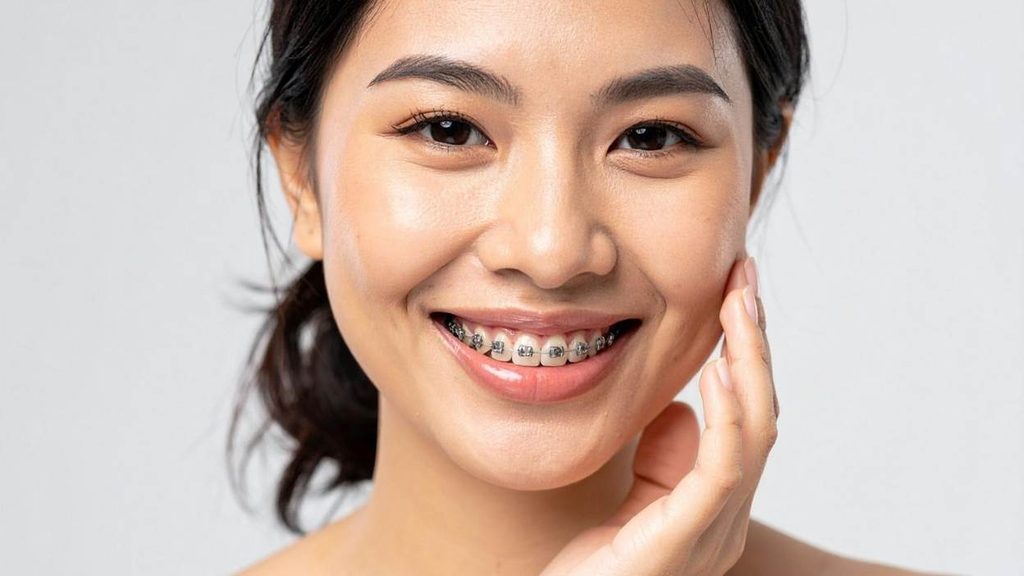
The upfront treatment price isn’t the whole story. Both options carry additional costs that don’t show up in the initial quote, and they can meaningfully shift which one ends up cheaper.
Hidden Costs of Invisalign
Invisalign has a hidden cost braces don’t: if you lose or break an aligner tray, replacements run $200 to $400 per tray set, though some offices include one or two free replacements. For patients prone to misplacing things, this adds up fast over a treatment that involves dozens of trays.
Other Invisalign cost considerations:
- Replacement trays for lost or damaged aligners
- Refinement aligners if teeth don’t track as planned, sometimes included, sometimes not
- Retainers after treatment, though these apply to braces too
Hidden Costs of Braces
Traditional braces carry their own less-obvious expenses:
- Emergency visits for broken brackets or poking wires, which Invisalign avoids entirely
- More frequent office visits for adjustments, which means more time off work and travel costs
- Repairs when brackets pop off from eating the wrong foods
- Longer treatment in some cases, extending the total number of billable appointments
The Convenience Cost Factor
Invisalign requires fewer office visits than braces, which appeals to busy patients, while braces need periodic in-office adjustments every four to eight weeks. If you’re taking time off work for every appointment, the “cheaper” braces option can quietly cost you more in lost hours than the price difference saves.
| Hidden Cost | Braces | Invisalign |
| Lost/broken component | Bracket repair visit | $200–$400 per tray set |
| Emergency appointments | Possible (wires, brackets) | Rare to none |
| Office visit frequency | Every 4–8 weeks | Every 6–8 weeks |
| Time off work | More visits | Fewer visits |
| Post-treatment retainer | Yes | Yes |
Which Is Cheaper for Your Specific Case
Here’s the truth that generic cost articles miss: the cheaper option genuinely depends on your case complexity. There’s no universal answer.
For Mild to Moderate Cases
If you have minor crowding, small gaps, or mild alignment issues, Invisalign is often the cheaper or equally-priced option. Simplified plans like Invisalign Express or Invisalign Lite are designed specifically for these cases and can undercut traditional braces pricing. Invisalign Lite can match or undercut traditional braces pricing for mild-to-moderate cases.
For these patients, Invisalign also often delivers faster results, which can mean fewer total appointments and lower overall treatment costs.
For Complex and Severe Cases
If you have severe misalignment, significant bite issues, or complex orthodontic problems, traditional braces tend to be more cost-effective. Braces provide more precise control over tooth movement and handle severe cases that Invisalign either can’t treat or would require much longer, more expensive treatment plans to address.
Complex cases treated with Invisalign frequently need refinement trays and extended treatment, which pushes the cost past what braces would have run.
Quick Decision Framework
| Your Situation | Likely Cheaper Option |
| Minor crowding or spacing | Invisalign (Express/Lite) |
| Moderate alignment issues | Roughly equal; lifestyle decides |
| Severe misalignment | Traditional braces |
| Complex bite correction | Traditional braces |
| Priority on fewer visits | Invisalign (time savings) |
| Priority on lowest sticker price | Metal braces |
Pro tip: Don’t choose based on the treatment category alone. A personalized treatment plan from an actual consultation, using X-rays and a clinical exam, gives you the real number for your mouth. Everything before that is an educated guess.
Financing That Changes the Upfront Picture
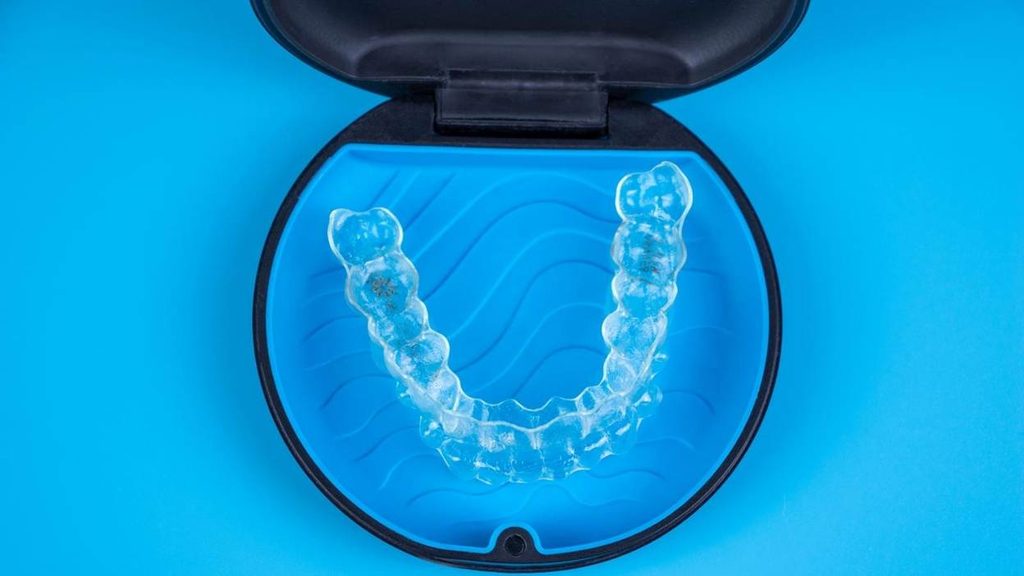
The sticker price rarely reflects what you’ll actually pay per month, and this is where the braces vs Invisalign cost question becomes far more manageable than it first appears.
Flexible payment options starting around $350 down and $199 per month at 0% interest make both treatments financially accessible, and insurance now covers Invisalign similarly to braces at many plans.
Common financing structures for both braces and Invisalign:
- Monthly payment plans that split the total into manageable installments over the treatment duration
- Interest-free financing offered by many dental offices for qualifying patients
- In-office savings plans that provide discounts for patients without insurance
- FSA and HSA pre-tax dollars applied toward either treatment
The takeaway: the upfront cost that scares people off is rarely what they actually pay in a lump sum. Most patients finance orthodontic treatment across the full treatment timeline, which turns a $5,000 sticker price into a manageable monthly figure.
At Stonelodge Dental, Invisalign treatment comes with flexible financing, and the current Spring special starts at $2,999 for a complete Invisalign package with retainers and whitening included, with payments as low as $129 per month.
For the right case, that pricing is genuinely competitive with traditional braces before you even factor in the convenience of clear aligners over metal brackets.
Braces vs. Invisalign: The Complete Picture
To bring it all together, here’s how the two options compare across every factor that affects cost and value, not just the price tag.
| Factor | Traditional Braces | Invisalign |
| Upfront cost | $3,000–$7,500 | $3,500–$8,500 |
| Best for | Complex, severe cases | Mild to moderate cases |
| Insurance coverage | Often covered ~50% | Often covered equally |
| Office visits | Every 4–8 weeks | Every 6–8 weeks |
| Hidden costs | Emergency repairs | Lost tray replacements |
| Treatment control | More precise | Excellent for suitable cases |
| Discretion | Visible | Nearly invisible |
| Oral hygiene | Harder to clean around | Removable for normal brushing |
| Technology | Standardized brackets | 3D digital mapping, custom software |
A few technical points worth knowing, since they explain the pricing:
- Invisalign uses proprietary 3D digital mapping and custom software to build each personalized treatment plan, which is part of why the lab costs run higher than standardized brackets
- Compliance drives Invisalign’s success: the aligners only work when worn 20 to 22 hours daily, so the “cost” of non-compliance is extended treatment and added expense
- Braces effectively treat severe orthodontic cases that fall outside Invisalign’s range, which is why complex cases lean toward braces on cost
- Traditional braces require periodic in-office adjustments every four to eight weeks, a built-in part of the treatment cost and timeline
For patients still weighing the decision, understanding whether Invisalign is better than braces for their specific goals matters as much as the cost comparison itself.
Braces or Invisalign? Get Your Real Number at Stonelodge Dental
The cheaper option isn’t braces or Invisalign universally. It’s whichever one fits your case complexity, your insurance, and your lifestyle. The 2026 price gap has narrowed so much that cost is rarely the deciding factor anymore, which means you get to choose based on what actually works for you.
Key takeaways:
- Braces run $3,000 to $7,500 and Invisalign $3,500 to $8,500, with a national gap of roughly $175
- For mild to moderate cases, Invisalign is often cheaper or price-competitive with braces
- For severe and complex cases, traditional braces tend to be the more cost-effective choice
- Most insurance plans cover both equally under a lifetime orthodontic maximum of $1,000 to $3,500
- Hidden costs differ: Invisalign has tray replacements, braces have emergency repairs and more visits
- FSA and HSA pre-tax dollars cut effective costs by 20 to 35% for either option
- Financing turns intimidating sticker prices into manageable monthly payments
At Stonelodge Dental, Dr. Saadia Basit gives you a transparent, case-specific cost breakdown before you commit to anything, with flexible Invisalign financing and a current package starting at $2,999. No guesswork, no generic estimates, just the real number for your smile.
Book your consultation today or call 214-613-1500 to speak with our McKinney team directly.
FAQs About Invisalign vs Braces Cost
Which is faster, braces or Invisalign?
It depends on the case. Invisalign often delivers faster results for mild alignment issues, sometimes in six to twelve months. Braces handle complex cases more precisely but may take longer overall.
Is $5,000 a lot for Invisalign?
No, $5,000 sits right in the typical range. Invisalign treatment averages $4,500 to $6,000 without insurance in 2026. Complex cases cost more; mild cases with Invisalign Lite cost considerably less.
What is the cheapest way to straighten teeth?
Metal braces are usually the cheapest upfront for most cases. For mild crowding, Invisalign Express or at-home aligners cost less. Insurance, FSA funds, and payment plans lower the effective price further.
Does insurance cover Invisalign the same as braces?
Usually, yes. Most PPO plans now apply orthodontic benefits equally to both, up to a lifetime maximum of $1,000 to $3,500. Confirm your provider bills Invisalign as orthodontic, not cosmetic.
Are there cheaper alternatives to both braces and Invisalign?
Yes. At-home clear aligner brands cost less but lack in-person supervision, which risks complications. For mild cases, they work; for anything moderate or complex, professional orthodontic care is safer and often cheaper long-term.
Why is Invisalign sometimes more expensive than braces?
Invisalign aligners use proprietary 3D digital mapping, custom software, and lab-fabricated aligners, raising production costs. That advanced technology and the discreet, removable design account for the slightly higher price over standardized metal brackets.