
Let’s start with a stat that surprises most people: root canal treatment becomes necessary when the pulp inside your tooth becomes infected or damaged beyond the body’s ability to heal, a condition that affects approximately 52% of adults globally at some point in their lives. That’s more than half of all adults. If you’re wondering whether your tooth pain is a “wait and see” situation or a “call the dentist now” situation, you’re asking exactly the right question.
The tricky part is that dental problems rarely resolve on their own, and the conditions requiring root canal therapy often start quietly before the pain arrives. By the time it hurts, the infection is usually well underway.
Here’s what this article covers:
- The specific conditions that actually require root canal therapy
- The warning signs that separate a root canal from a simple filling
- Why some teeth need a root canal without obvious pain
- What happens if you leave these conditions untreated
- What the procedure and recovery actually involve
If you’re in McKinney and dealing with tooth pain right now, the team at Stonelodge Dental offers root canal therapy that relieves pain and saves the natural tooth. Dr. Basit’s 18 years of experience means an accurate diagnosis first, then the least invasive treatment that solves the actual problem.
The Core Conditions That Require a Root Canal
Root canal therapy isn’t prescribed for tooth pain in general. It’s prescribed for specific conditions affecting the dental pulp, the soft tissue inside the tooth containing nerves and blood vessels. Here are the conditions that actually require it.
Deep Decay Reaching the Pulp
This is the most common cause. When tooth decay advances beyond the outer enamel and dentin layers and reaches the pulp, bacteria infect the soft tissue inside. Root canal therapy becomes necessary primarily because the decay has infected the pulp, and this infection can lead to abscess formation and potentially spread to other areas of your body if left untreated.
A routine filling handles decay caught early. Once decay reaches the pulp, a filling is no longer enough.
Irreversible Pulpitis
Irreversible pulpitis is inflammation of the dental pulp that cannot heal on its own. Unlike mild, temporary sensitivity, this is inflammation severe enough that the pulp can’t recover. The classic sign is temperature sensitivity that lingers long after the hot or cold stimulus is gone. Left alone, irreversible pulpitis progresses to pulp death.
Dental Pulp Necrosis
Dental pulp necrosis is the death of pulp tissue, usually resulting from untreated pulpitis. Once the pulp dies, the tooth can’t heal itself, and the dead tissue becomes a breeding ground for bacteria. A root canal removes the necrotic tissue before infection spreads into the jawbone.
Cracked or Fractured Tooth
Cracked teeth allow bacteria to infect the pulp. A crack or fracture that extends into the pulp chamber creates a direct pathway for bacteria. Severe tooth trauma can fracture the tooth crown and expose the pulp chamber entirely, requiring root canal treatment to restore the tooth’s structure.
Tooth Trauma
Trauma can damage the tooth pulp and cause infection, even without a visible fracture. Trauma to a tooth can compromise the pulp even if there are no visible fractures. Sometimes an injury from years ago causes the pulp to slowly die, showing up later as a darkening tooth.
Periapical Abscess
A periapical abscess is a severe bacterial infection that forms a pus pocket in the jawbone at the root tip. This is one of the more serious conditions requiring prompt root canal therapy, and it can cause facial swelling, fever, and significant pain.
Other Conditions
- Advanced periodontal disease: Advanced gum disease can allow bacteria to enter the pulp through lateral canals
- Faulty crowns: Faulty crowns may allow bacteria to reach the pulp beneath them
- Repeated dental procedures: Repeated dental procedures on the same tooth can eventually compromise the pulp
| Condition | What It Is |
| Deep decay | Cavity reaching the pulp |
| Irreversible pulpitis | Pulp inflammation that can’t heal |
| Pulp necrosis | Death of the pulp tissue |
| Cracked/fractured tooth | Bacteria entering through a crack |
| Tooth trauma | Injury compromising the pulp |
| Periapical abscess | Pus pocket at the root tip |
Warning Signs You Shouldn’t Ignore
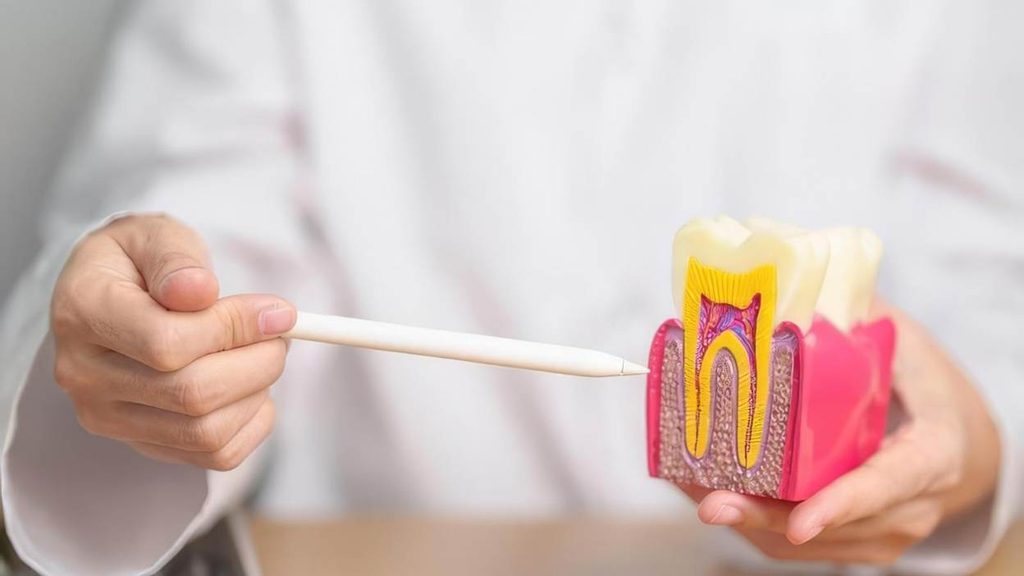
The conditions above often announce themselves through a recognizable set of symptoms. Knowing them helps you act before a manageable problem becomes an emergency.
Persistent Tooth Pain
The most telling sign is persistent pain that doesn’t resolve with over-the-counter pain medication, and this pain often worsens when you bite down or apply pressure. Unlike sharp, immediate cavity pain, root canal pain is typically a deep, throbbing ache that can radiate to your jaw, ear, or other teeth. Persistent pain lasting over 48 hours signals a serious infection.
Prolonged Temperature Sensitivity
Brief sensitivity to hot or cold is normal. Pain that lingers is not. If your tooth stays painful for 30 seconds or more after drinking coffee or eating ice cream, that lingering sensitivity suggests pulp damage. Temperature sensitivity progressing from cold to heat often means advancing nerve damage.
Swollen or Tender Gums
Swelling of the gums near the affected tooth, particularly if accompanied by a small bump resembling a pimple, indicates an abscess has formed, and immediate treatment is needed. This gum bump is a hallmark sign of active infection. Any swollen or inflamed gums around a single tooth warrant a prompt evaluation.
Tooth Discoloration
A tooth that turns gray or dark compared to surrounding teeth may be showing signs of internal damage, and single-tooth discoloration turning gray or black signals pulp death. This darkening indicates the pulp inside is deteriorating.
Pain When Chewing
Severe pain when chewing or under pressure can indicate inflammation around the tooth root and the need for endodontic treatment.
The complete warning sign checklist:
- Persistent, throbbing pain lasting more than 48 hours
- Pain that radiates to the jaw, ear, or nearby teeth
- Lingering sensitivity to hot or cold beyond 30 seconds
- A pimple-like bump on the gums near the tooth
- A tooth turning gray or dark
- Pain when biting or chewing
- Bad breath or an unpleasant taste that persists despite brushing
- Facial swelling or fever, which signals a serious infection needing prompt care
Watch out for self-diagnosis. Some conditions like teeth grinding, a traumatic bite, or food impaction between teeth can cause symptoms similar to those requiring a root canal. Only a dentist with clinical tests and X-rays can confirm what’s actually happening inside the tooth.
When a Tooth Needs a Root Canal Without Pain
Here’s the counterintuitive part that catches many people off guard: not every tooth requiring root canal therapy hurts.
When the pulp dies completely (necrosis), the nerve inside the tooth stops sending pain signals. The infection is still there and still spreading, but the pain fades because the nerve is dead. This is one of the most dangerous scenarios, because patients assume a pain-free tooth is a healthy tooth.
Signs of a “silent” root canal condition:
- A tooth that darkens or turns gray without any pain
- A gum pimple or bump that comes and goes with no accompanying toothache
- A tooth that had severe pain that suddenly stopped (often a sign the pulp has died, not healed)
- Infection detected on a routine dental X-ray during a checkup with no symptoms
This is exactly why regular dental checkups matter. A noticeable darkening of the tooth indicates possible nerve death due to trauma or decay, and your dentist can catch these silent conditions on X-rays before they become a full-blown abscess. Routine cleanings and exams aren’t just about cavities. They catch the problems that don’t hurt yet.
What Happens If You Leave It Untreated
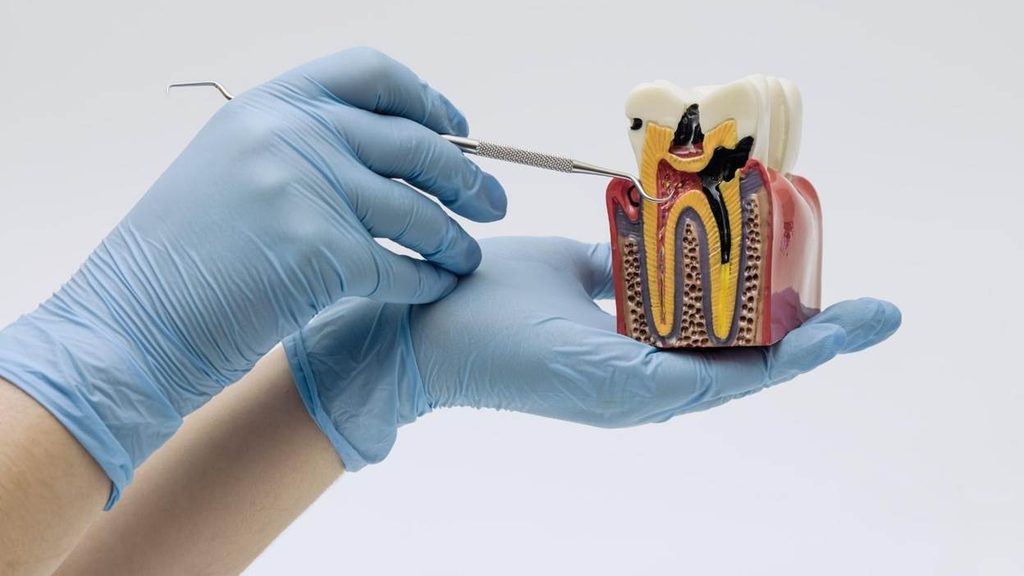
Ignoring the conditions that require root canal therapy doesn’t make them go away. It makes them worse, and the consequences escalate.
Ignoring signs that you might need a root canal can have dire consequences, including tooth loss, because when infections go untreated, the damage becomes irreversible and results in the need to extract the affected tooth.
Here’s the typical progression when these conditions are left untreated:
Stage 1: Localized infection
The pulp infection stays within the tooth. This is when a root canal is most straightforward, and the tooth is easily saved.
Stage 2: Abscess formation
The infection spreads to the root tip, forming a periapical abscess, a pus pocket in the jawbone. Swelling and tenderness in the gums indicate a dental abscess has developed.
Stage 3: Spreading infection
An untreated infection can migrate to neighboring teeth, affect the jawbone, or even enter the bloodstream, leading to systemic health problems. A loose tooth may indicate an infection spreading from the root into the jawbone.
Stage 4: Tooth loss and systemic risk
The spread of infection is a significant risk when dental issues are neglected. Facial swelling or fever may indicate a serious dental infection that requires prompt care. At this point, the tooth often can’t be saved, and the infection poses a broader health threat.
| Timeline | What Happens Without Treatment |
| Early | Localized pulp infection, tooth easily saved |
| Weeks | Abscess forms at the root tip |
| Weeks–months | Infection spreads to jaw and nearby teeth |
| Advanced | Tooth loss, possible systemic infection |
The cost comparison matters here too. Early intervention with a root canal saves your natural tooth. Waiting often means tooth extraction followed by a dental implant or bridge, which is more invasive and more expensive than the root canal would have been.
What the Root Canal Procedure Involves
Once your dentist confirms which condition is affecting your tooth, the procedure itself is far more comfortable than its reputation suggests. Modern root canal procedures effectively eliminate pain rather than cause it.
Here’s what actually happens:
Step 1: Diagnosis
A dentist evaluates the need for root canal treatment using clinical tests and X-rays to confirm the pulp is infected or damaged.
Step 2: Anesthesia
Patients receive local anesthesia, numbing the tooth completely so the procedure is painless. A dental dam isolates the tooth to keep it clean and dry.
Step 3: Removing the infected pulp
Root canal treatment removes the infected pulp from the tooth. The dentist cleans out the canals thoroughly to eliminate all infected tissue.
Step 4: Sealing the tooth
After cleaning, the tooth is sealed with a material called gutta-percha to prevent reinfection. A temporary filling may be placed until a permanent filling or crown is added.
Step 5: Restoration
A permanent filling or a porcelain crown restores the tooth’s strength and function. The procedure usually takes one or two appointments.
What Recovery Looks Like
- Recovery usually takes 2 to 4 hours after the procedure as the numbness wears off
- Patients may feel soreness for a few days post-treatment, manageable with over-the-counter pain relievers
- Avoid eating until the numbness completely wears off to prevent biting your cheek or tongue
- Stick to soft foods until your dentist clears you for normal eating
Root canals relieve pain and save natural teeth. That’s the entire point of the procedure: eliminating the infection while keeping the tooth you already have.
Don’t Ignore the Signs. Save Your Tooth at Stonelodge Dental
The conditions that require root canal therapy all share one thing: they get worse, not better, when ignored. Deep decay, irreversible pulpitis, pulp necrosis, cracks, trauma, and abscesses each threaten the tooth from the inside, and the sooner they’re addressed, the more likely your natural tooth is saved.
Key takeaways:
- Root canal therapy is required when the pulp becomes infected or damaged beyond healing, affecting over half of adults at some point
- Deep decay reaching the pulp is the most common condition requiring treatment
- Irreversible pulpitis, pulp necrosis, cracked teeth, trauma, and abscesses all require root canals
- Persistent pain, lingering temperature sensitivity, gum swelling, and tooth discoloration are the key warning signs
- Some teeth need a root canal without pain, especially once the pulp has died, which is why checkups matter
- Untreated conditions progress to abscess, spreading infection, tooth loss, and systemic health risks
- Modern root canals eliminate pain rather than cause it and usually take one or two appointments
At Stonelodge Dental, Dr. Saadia Basit combines 18 years of experience with advanced imaging to diagnose exactly which condition is affecting your tooth, then delivers root canal therapy that relieves the pain and preserves your natural smile. If you’re experiencing any of the warning signs, waiting only raises the stakes.
Book your appointment today or call 214-613-1500 to speak with our McKinney team directly.
Frequently Asked Questions
What conditions require a root canal?
Deep decay reaching the pulp, irreversible pulpitis, pulp necrosis, cracked or fractured teeth, tooth trauma, and periapical abscesses all require root canal therapy. Each involves infected or damaged pulp that can’t heal on its own.
When is root canal therapy not recommended?
Root canals aren’t recommended when a tooth is too damaged to restore, has severe bone loss, or has a vertical root fracture. In these cases, tooth extraction followed by an implant or bridge is often the better option.
When is root canal therapy necessary?
Root canal therapy is necessary when the pulp is infected or inflamed beyond healing, typically from deep decay, trauma, cracks, or abscess. Persistent pain, lingering sensitivity, or gum swelling usually signal the need.
Why am I suddenly needing root canals?
Sudden root canal needs often stem from advancing decay, undiagnosed cracks, old trauma finally causing pulp death, or failing prior dental work. Deep cavities and grinding-related fractures are common culprits. A dentist can pinpoint the cause.
Does a root canal hurt?
No. Modern root canals eliminate pain rather than cause it. Local anesthesia numbs the tooth completely during the procedure. Mild soreness for a few days afterward is normal and manageable with over-the-counter pain relievers.
How long does a root canal take?
Most root canals take one or two appointments, each roughly 60 to 90 minutes depending on the tooth and number of canals. Molars with more canals typically take longer than front teeth.